

Artist Spotlight: Ronny Smith
Guitarist and composer Ronny Smith creates a unique, engaging sound blending contemporary jazz, soul, funk, and gospel. We talked recently about his latest album and its title track, "Velvet Vibe."

Allen Kepler: Ronny, how did “Velvet Vibe” come about?
Ronny Smith: The idea behind Velvet Vibe was to create more than just a collection of songs—I wanted to create an atmosphere. When I was writing and recording the album, I kept coming back to two qualities I wanted listeners to experience: warmth and groove. That's where the title came from.

'Velvet' represents the warmth, richness, and smoothness of the guitar tone and the overall sound of the record. 'Vibe' reflects the rhythm, energy, and emotional connection that happens when great musicians come together and the music just feels right.
Every song has its own personality, but together they tell one musical story. My goal wasn't to impress people with technique—it was to write memorable melodies, create deep grooves, and make music that people would want to come back to again and again. If someone finishes the album feeling relaxed, inspired, or simply in a better place than when they started listening, then I've accomplished what I set out to do.
My goal wasn't to impress people with technique—it was to write memorable melodies, create deep grooves, and make music that people would want to come back to again and again.
AK: "Velvet Vibe" is also the title of your new album. What can we expect from some of the other tracks?
RS: One of the things I'm most excited about with "Velvet Vibe is that each composition has its own personality, while still fitting together as one musical journey.
"Breeze" is one of my favorite tracks because it has a laid-back, uplifting feel. It's melodic, easy to listen to, and captures that relaxed contemporary jazz vibe that I love to write.
"Night Wave" takes the listener in a different direction. It has a deeper groove and a bit more intensity, creating the feeling of driving along the coast after dark. It's atmospheric and gives the band room to really stretch musically.
Another track that's special to me is "Heaven's Angel." It's a very heartfelt composition with beautiful vocal textures woven into the arrangement. It has a reflective quality and brings a different emotional dimension to the album."Once Upon a Dream" is a very special composition for me because it leans more toward a classic jazz style.
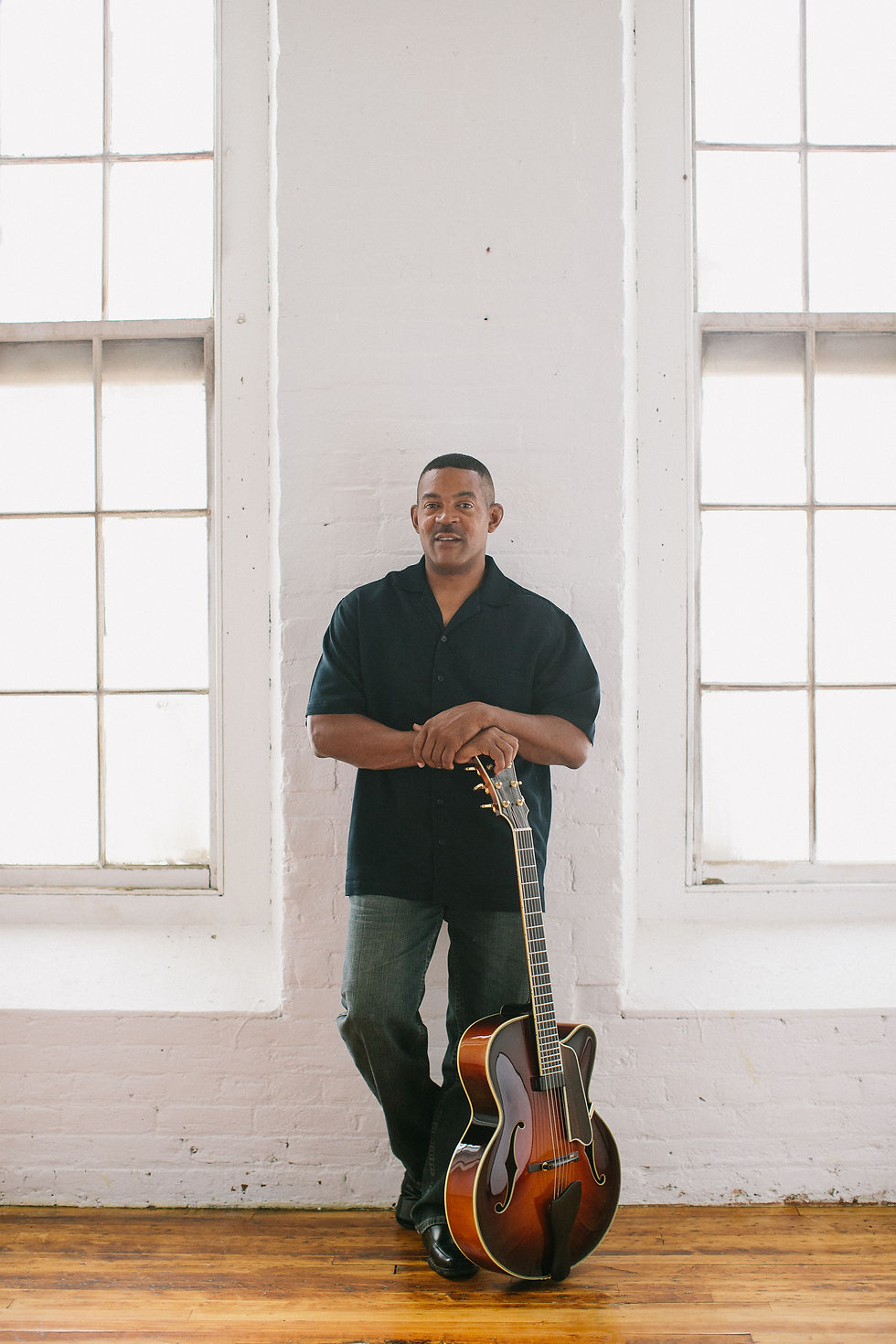
While "Velvet Vibe" is rooted in contemporary jazz, this piece reflects my appreciation for the rich traditions of jazz. It has a more traditional feel, with plenty of room for melodic expression and improvisation. I wanted to write something that honors the timeless influence of the great jazz guitarists who inspired me, while still fitting naturally within the overall character of the album. I think it's a nice surprise for listeners because it offers a different side of who I am as a musician.
Overall, "Velvet Vibe" is about melody, groove, and emotion. Whether it's an upbeat groove or a quieter moment, my goal was for every song to tell its own story while creating an album people can enjoy from beginning to end."
AK: I love your guitar on "Velvet Vibe," you've really got a signature sound. How did you create that?
RS: Thank you—I really appreciate that. Developing my sound has been a journey over many years. Like most guitarists, I was influenced early on by players like Wes Montgomery and George Benson. I loved their warmth, phrasing, and melodic approach, and those influences are still a part of who I am today.
But the biggest turning point for me came when I first heard the late Chuck Loeb. His guitar tone immediately caught my attention. It was warm, smooth, expressive, and perfectly suited to contemporary jazz. I remember thinking, 'That's the kind of sound I'd love to have.' From that moment on, I began pursuing a similar tonal character—not to sound like Chuck, but to capture that same warmth, clarity, and musicality that inspired me so much.
Over the years, through countless hours of playing, experimenting with different guitars and gear, and refining my touch and phrasing, that inspiration gradually evolved into my own voice. I've learned that while equipment plays a role, your hands, your phrasing, and your musical personality are what truly define your sound.
Today, my goal is simple: to create a warm, expressive tone that serves the music. I want every note to sing, every melody to connect with the listener, and every performance to tell a story. If someone can hear a few notes and recognize that it's me playing, that's one of the greatest compliments I could receive.

AK: Tell me more about those guitar influences.
RS: I've been fortunate to be influenced by some of the greatest guitarists in jazz. Early on, Wes Montgomery and George Benson had a tremendous impact on me. I was drawn to Wes's incredible sense of melody and octave playing, and George's beautiful tone, phrasing, and effortless groove. Those two really shaped the way I think about playing melodic jazz guitar.
When I was studying music, my jazz guitar instructor, Larry Waldridge, introduced me to the music of Pat Martino. Later, I had the opportunity to study privately with Pat, and that experience completely changed the way I looked at improvisation, harmony, and the guitar as an instrument.
As my career developed, I discovered the late Chuck Loeb. His warm, polished tone and contemporary approach really resonated with me. Hearing Chuck inspired me to pursue a similar warmth and clarity in my own guitar sound, while still developing a musical voice that reflects who I am as an artist.
Beyond guitarists, I've also been inspired by great musicians across jazz, soul, and R&B. I believe every influence becomes part of your musical vocabulary. In the end, the goal isn't to sound like your heroes—it's to let those influences help you discover your own voice. That's what I've tried to do throughout my career.
AK: Thanks so much for talking iwth us Ronny. Our readers can find out more at www.ronnysmith.com.


